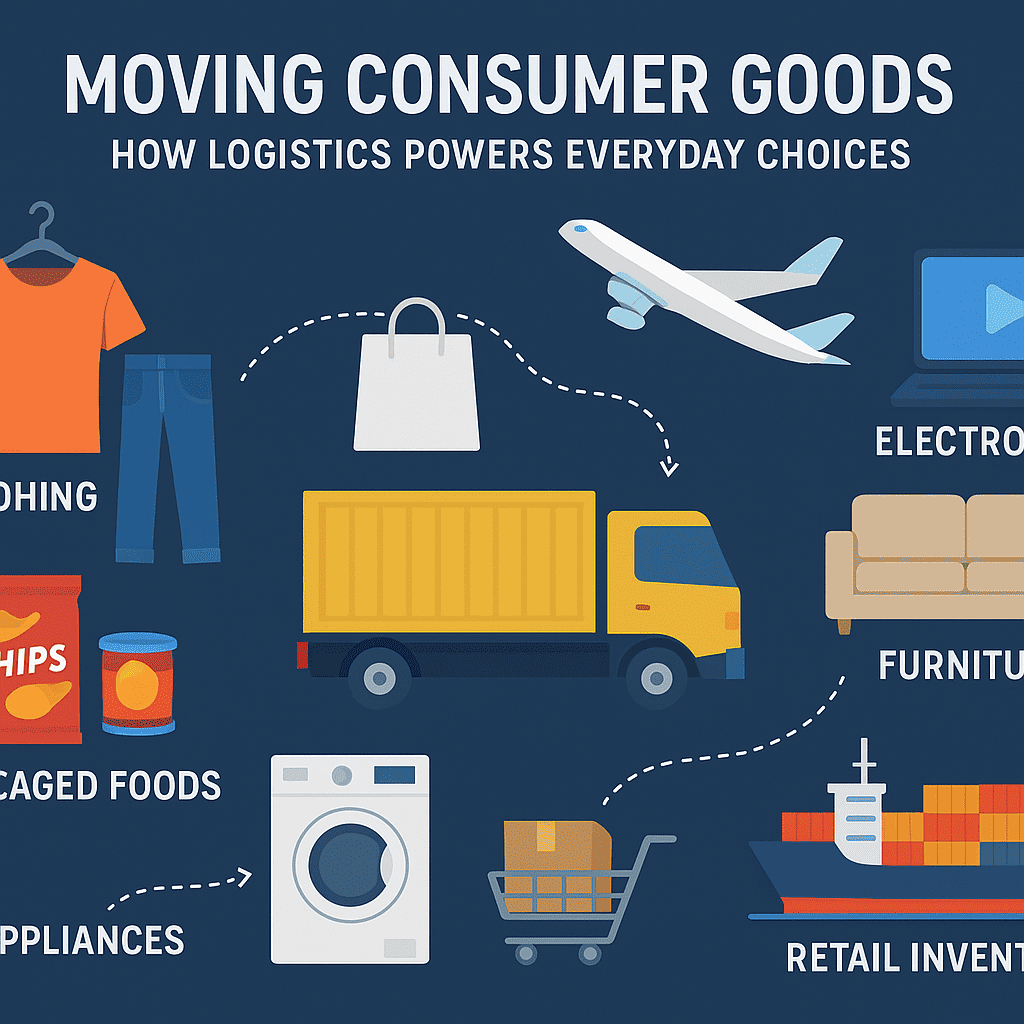
When you buy a pair of jeans, upgrade your smartphone, stock your pantry, or order furniture online, you’re seeing only the final step of a much larger process. Behind every purchase is a consumer goods logistics network that ensures availability at the right place, time, and price.
From clothing and electronics to appliances, furniture, packaged foods, and retail inventory, all consumer goods depend on multiple transport modes—ocean, air, rail, and road. But the real story lies in how logistics adapts uniquely to each product category while keeping up with speed, safety, and sustainability.
Clothing: Fast Fashion Meets Fast Logistics
Fashion moves at the pace of trends. Social media-driven micro-trends and seasonal launches make clothing logistics a race against time.
- Transport Mode: Ocean freight for bulk stock; air freight for urgent replenishment.
- Challenge: A two-week delay can make “new arrivals” outdated.
- Logistics Innovation: Predictive analytics for demand forecasting and inventory positioning.
👉 Logistics is the new runway—brands that deliver fast win consumer loyalty.
Electronics: High Value, High Risk
Phones, laptops, and gadgets aren’t just high-priced—they’re high-risk due to theft and rapid obsolescence.
- Transport Mode: Air cargo for speed and security; rail/road for bulky appliances.
- Challenge: Electronics lose value quickly—delays can destroy profitability.
- Logistics Innovation: Blockchain and IoT tracking for theft prevention and real-time visibility.
👉 Here, logistics isn’t just moving goods—it’s about protecting value.
Appliances & Furniture: Big, Bulky, and Demanding
Refrigerators and sofas demand special handling. Damages in transit not only cost money but also harm brand reputation.
- Transport Mode: Ocean for long-haul, rail for inland, road for last-mile.
- Challenge: Bulky items need careful handling and installation.
- Logistics Innovation: White-glove delivery services offering setup, returns, and recycling.
👉 For large consumer goods, logistics is the customer experience.
Packaged Foods: Freshness on the Move
Biscuits, frozen meals, and packaged snacks all depend on cold-chain logistics and strict regulations.
- Transport Mode: Reefer trucks and controlled warehousing; air freight for perishables.
- Challenge: Compliance with food safety laws across regions.
- Logistics Innovation: AI-powered demand forecasting to balance freshness and reduce waste.
👉 In food logistics, speed equals trust.
Retail Inventory: Omnichannel Expectations
Consumers now shop across multiple platforms—store, app, and web. That means retail logistics must synchronize supply across channels.
- Transport Mode: Multimodal—sea, air, road, and rail combined.
- Challenge: Inventory misplacement causes costly returns and lost sales.
- Logistics Innovation: Micro-fulfillment centers near cities and drone/e-van last-mile delivery.
👉 In retail, logistics isn’t storage—it’s anticipation.
Why All Transport Modes Matter
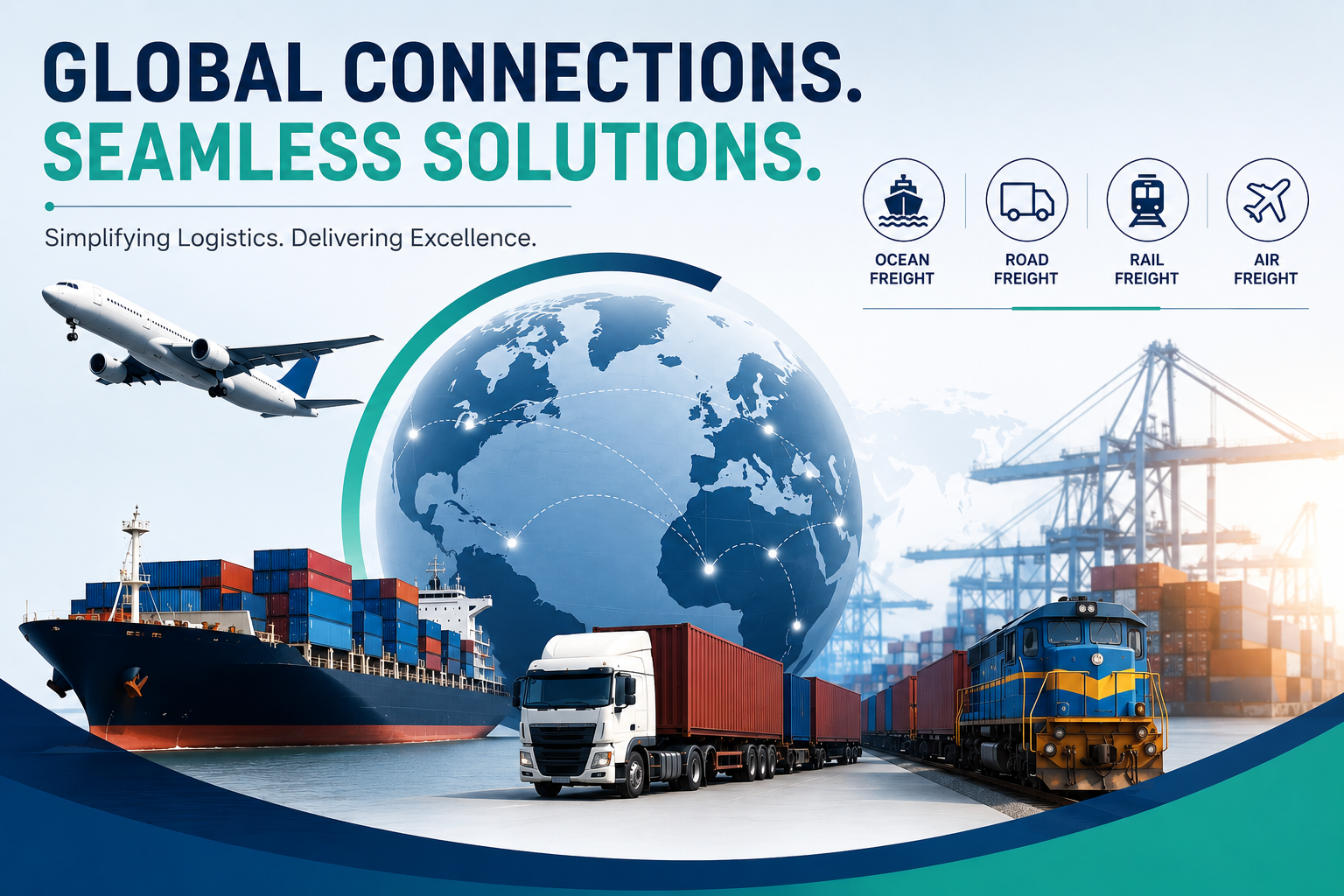
Each mode plays a strategic role in consumer goods transportation:
- Sea Freight → bulk movement, cost-efficient.
- Air Freight → urgent, high-value shipments.
- Rail Freight → sustainable, efficient inland transport.
- Road Freight → flexible, last-mile backbone.
Consumer goods logistics is never about choosing one mode—it’s about blending them smartly.
The Big Idea: Logistics Shapes Consumer Choice
Consumers may not realize it, but logistics directly drives buying behavior:
- Faster delivery = brand preference.
- Smooth furniture installation = customer loyalty.
- Fresher food = repeat purchases.
👉 The unseen efficiency of logistics becomes the visible reason behind consumer trust.
Conclusion
Clothing, electronics, appliances, furniture, packaged foods, and retail inventory may look different on shelves, but their success depends on one thing: adaptive logistics.
As expectations grow—faster delivery, sustainability, transparency—logistics will move from backstage to center stage. Tomorrow’s consumer goods leaders won’t just win on what they sell but on how they move it.