A freight forwarder is a logistics expert who manages the movement of goods across international borders on behalf of exporters and importers. They coordinate transportation, documentation, customs clearance, warehousing, and delivery—ensuring shipments reach their destination safely and on time.
In today’s globalized economy, freight forwarders are essential for navigating trade regulations, optimizing supply chains, and mitigating operational risks.
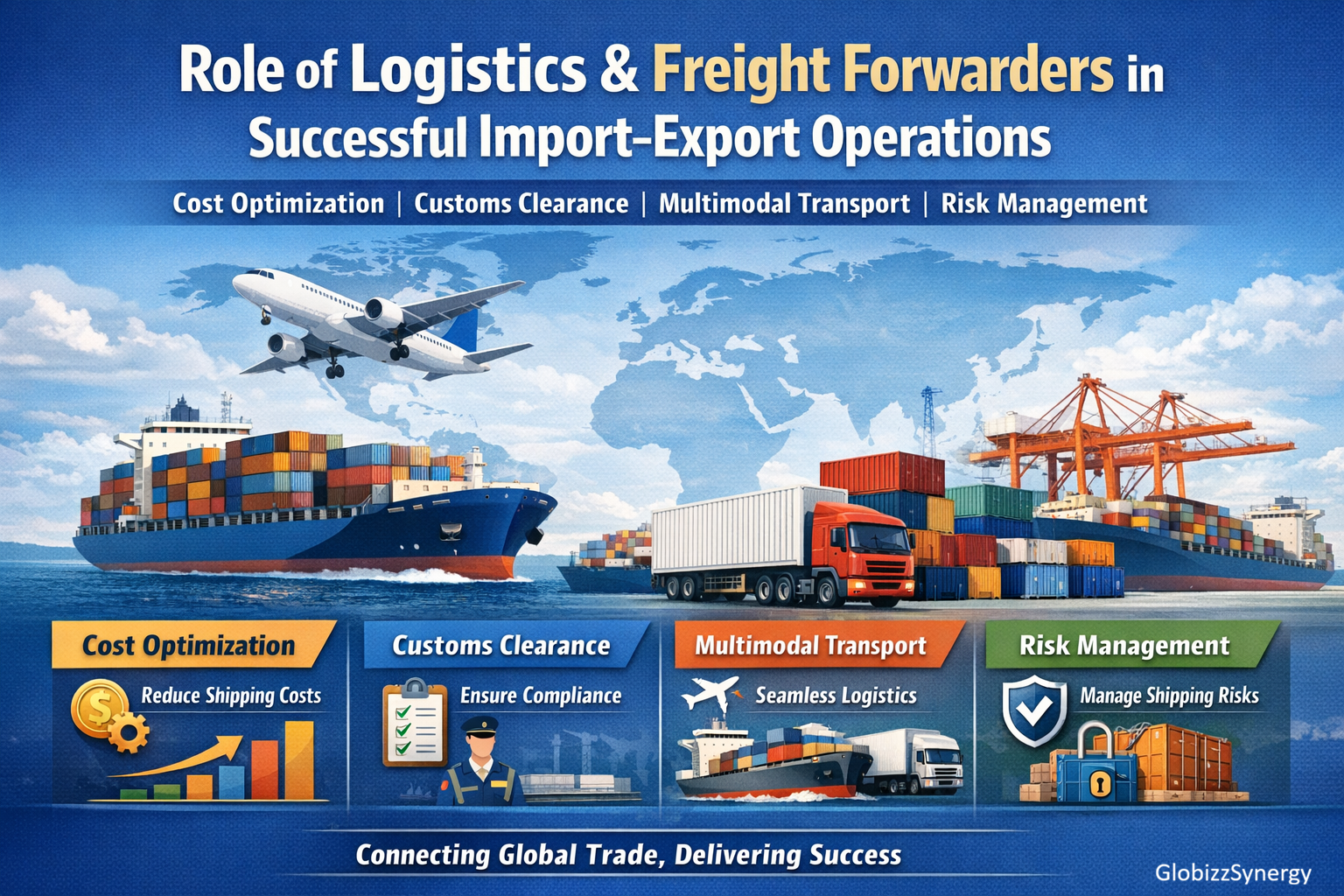
1. Cost Optimization in Import–Export Operations
One of the most significant contributions of logistics and freight forwarders is cost optimization.
How Freight Forwarders Reduce Costs:
- Freight consolidation to lower per-unit shipping costs
- Optimized route planning to avoid delays and congestion
- Negotiated freight rates with shipping lines, airlines, and transporters
- Efficient container utilization (FCL/LCL optimization)
- Avoidance of penalties due to incorrect documentation or delays
By leveraging industry relationships and data-driven planning, freight forwarders help businesses remain competitive in price-sensitive global markets.
2. Expertise in Customs Clearance & Compliance
Customs regulations vary across countries and change frequently. Errors in documentation or non-compliance can lead to shipment delays, penalties, or even confiscation of goods.
Role of Freight Forwarders in Customs Clearance:
- Preparation and verification of import–export documents
- Classification of goods under correct HS codes
- Duty and tax calculation
- Liaison with customs authorities
- Ensuring compliance with trade laws and export-import policies
In India, freight forwarders work closely with regulatory bodies like Directorate General of Foreign Trade to ensure exporters and importers follow current trade guidelines.
This expertise minimizes risks and ensures faster cargo movement through ports and borders.
3. Multimodal Transport for Efficient Global Movement
Modern supply chains rely heavily on multimodal transportation, combining sea, air, rail, and road transport for efficiency and flexibility.
Benefits of Multimodal Logistics:
- Reduced transit time
- Lower overall transportation costs
- Improved supply chain visibility
- Greater flexibility during disruptions
- Environmentally efficient shipping solutions
Freight forwarders design end-to-end logistics solutions by selecting the most suitable transport modes based on cargo type, urgency, and destination—ensuring seamless movement across international trade corridors.
4. Risk Management in Import–Export Logistics
International trade involves multiple risks—delays, cargo damage, regulatory changes, geopolitical disruptions, and financial exposure.
How Freight Forwarders Manage Risks:
- Cargo insurance coordination
- Real-time shipment tracking and monitoring
- Contingency planning for route disruptions
- Compliance audits and documentation checks
- Proactive communication during unforeseen events
By identifying risks early and implementing preventive strategies, freight forwarders protect businesses from financial losses and reputational damage.
Why Freight Forwarders Are Strategic Trade Partners
Beyond operations, freight forwarders add strategic value by:
- Advising on market entry logistics
- Supporting scalability for growing exporters
- Enhancing customer satisfaction through reliable delivery
- Improving supply chain resilience
They act as a single point of contact, simplifying complex import–export processes and allowing businesses to focus on growth.
Conclusion
In an increasingly competitive and regulated global trade environment, the role of logistics and freight forwarders has never been more critical. Their expertise in cost optimization, customs clearance, multimodal transport, and risk management ensures smooth, compliant, and efficient import–export operations.
For businesses aiming to expand globally, partnering with a reliable freight forwarder is not just an operational choice—it’s a strategic advantage.